
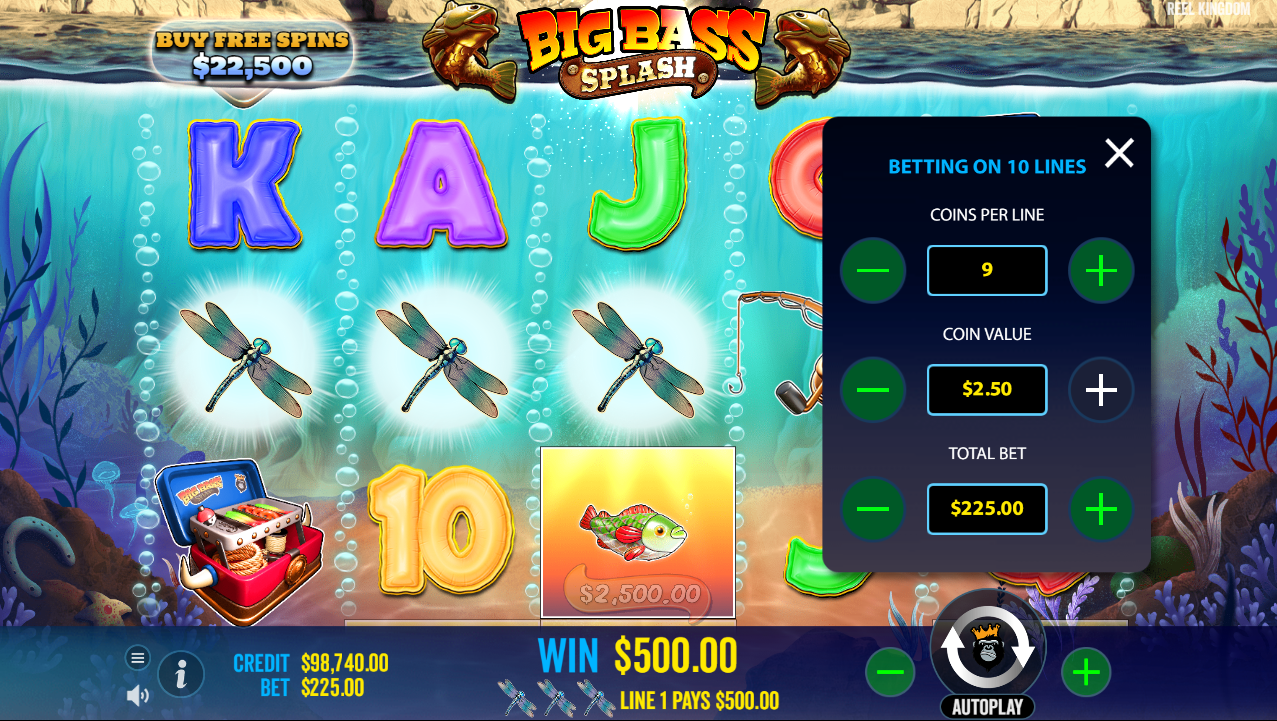
As analysts who observe player behaviors, we’ve observed something interesting https://big-basssplash.eu/. Beyond the fishing theme and bonus rounds of Big Bass Splash, a whole range of player superstitions has emerged. In the UK, a thick web of superstitions and rituals now shapes how people play. These concepts don’t change the game’s core fairness, which is driven by a Random Number Generator (RNG). But they reveal us a lot about how people search for patterns and try to stay in command of a game of chance. We’re going to explore at where these ideas originate from, why they persist, and how they mesh with playing responsibly. We’ve watched forums, streamer chats, and player accounts. A defined group of beliefs persists showing up, altering how the game seems socially.
Rituals Prior to the First Spin Preparing the Reels
Ceremonies to get ready are all around. We’ve met players who must do a certain number of “practice spins” on the lowest bet. They think this “warms up” the game or pays it honor. Others deliberately avoid the “Quick Spin” feature for their initial few spins. They see the full animation as a necessary ceremony. These acts work as a mental buffer between the player and the game’s variance. They create a personal tradition that marks the shift from normal life to game time. It’s a self-made structure that offers comfort before facing pure randomness. The ritual side is strong. It’s like athletes with their pre-game habits to get centered. It’s mental prep for the fun ahead.
We’ve made a list of these pre-spin rituals. Some players always click the scatter symbol on the loading screen for luck. Others make sure their first spin is done by clicking the button, not using auto-spin. A common theme is the idea that the game “tests” a player’s patience early on. These rituals do nothing to the RNG. But they give a feeling of control. They let the player feel like an active part of their own fortune, not just a passive observer. This is a key mental trick. It makes high-variance games like Big Bass Splash more manageable to enjoy over long sessions. The player feels they did their share.
Collective Luck and Shared Session Stories
The UK online community subscribes to “shared luck” stories. When someone shares a screenshot of a huge Big Bass Splash win, others often hurry to play. They believe the “luck is in the air” or the game is “paying out.” On the other hand, a wave of reports about dry spells can put everyone off. This herd effect illustrates how gaming superstitions can propagate like a social virus. Streaming platforms make this stronger. A popular streamer’s big win can cause a measurable spike in players. It demonstrates how a single story can overpower statistical understanding for many people. The community functions as one superstitious creature responding to signals.
This delves into “hot casino” myths. Players believe one specific online casino’s version of Big Bass Splash is paying out better than others. This takes place even though all licensed versions use the same RNG. Forum threads asking “which site is hot?” flourish on this idea. Also, players will exchange “session codes” or detail their exact betting pattern before a big win. Others copy it, hoping to recreate the success. This mimics strategy sharing in skill games, but here it’s directed at pure chance. It forms a powerful loop. The communal belief confirms itself through concentrated, simultaneous play. Every player’s outcome is still independent and random.
Anthropomorphizing the Game: The “Moody” Slot
One of the more interesting superstitions concerns giving Big Bass Splash a personality. Players often say the game is in a “good mood” or a “stingy mood.” This personification is a cognitive trick to explain variance. If the slot is “moody,” its behavior feels more predictable and understandable than the cold truth of RNG. You catch it in the language: “It owes me a bonus after all those spins,” or “It’s being friendly today.” This mindset has two sides. It can make the relationship with the game more playful. But it can also fuel the dangerous idea that the slot can “repay” losses. Giving unpredictable systems consciousness and intent is a fundamental human reaction.
This personification goes into strategy. Players talk about “soothing” the game with smaller bets after a loss period. Or they “reward” it with more play after a win. The slot becomes a digital fishing buddy with its own temper. We see this narrative a lot on live streams. Streamers talk directly to the game, begging or joking with it. This framing makes things more relatable and story-like. But the dangerous flip side is the gambler’s fallacy in disguise. It’s the belief that the slot’s “mood” creates debts and credits. A player sure the game “owes” them is in a risky spot. They might chase losses, seeing a random cold streak as a personal insult that needs fixing with more play.
The Ritual of Bet Sizing and Progressive Patterns
Beyond simple taboos on changing bets, there is a further complex layer of superstition around bet-sizing patterns. Many players adhere to rigid, self-made betting systems when they play Big Bass Splash. A widespread belief is that you have to “feed the slot” with steadily increasing bets to draw out the bonus. Or, you have to lower bets after a win to “cool it down.” These are no structured systems such as the Martingale. They are individual rituals based on how the game appears to behave. Players construct stories where the bet size is a method of communicating with the game. It is a indication of intention or regard.
Another common idea is the “trigger bet” theory. Players employ a normal bet size for the bulk of spins. But when they “feel” a bonus is near, they change to a specific, often higher, “trigger” amount for a few spins. The reasoning is that the game sees the heightened commitment and responds. We observe these patterns are shared and honed in community talks. They obtain credibility simply by being repeated. From a cold perspective, these rituals introduce a layer of calculated fantasy to play. They make the financial risk feel like a calculated plan, not a haphazard wager. That can perilously mask the reality of spending. Losses become framed as necessary steps in a ritual that will be rewarding eventually.
The meaning of the “Splash” in Bonus triggers
The noise and appearance of the “splash” when scatter symbols appear is a big point for superstition. Some players feel the strength or exact sound of the splash can indicate how strong the coming free spins will be. It’s just a standard visual effect, logically. But the excitement it generates is real. We’ve read forum threads where players talk about “listening for the deeper splash.” They assign these sound effects almost mythical qualities. It shows how sensory feedback becomes filled with meaning. A standard game event turns into a personal sign of things to come. The splash is a standard “reward cue.” The community has developed a whole language for anticipating things based on its small differences.
On closer inspection, players often claim they can tell a “small fish splash” from a “big bass splash.” The game probably only has a limited number of sound files. This belief gets more intense during the free spins round itself. Every fish hooked comes with its own splash. Players say they can “feel” when a big multiplier fish is going to appear based on the sound just before it. This extreme attention to game feedback is pure pattern-seeking. The human brain is skilled at it, even when no true pattern is existing. It makes the experience more engaging and tense. Every audio cue gets examined for secret meaning. It transforms a mathematically random element into a narrative of expectation and wondering. That enhances the fishing theme.
The Appeal of the “Golden Hour” for Fishing
A very common belief we have observed is the “golden hour.” Many UK players are certain certain times of day are more favorable. Dawn or late evening hours are favorite selections. This mirrors what real anglers say about the best fishing times. The ritual isn’t about software. It’s about getting your mind ready. Players commence these sessions with increased confidence, which can improve enjoyment. We’ve seen this belief establishes a shared schedule. Forums become active around these alleged peak times. It builds a common experience that transcends just spinning reels alone. The details can be exact. Some players will play exclusively at dawn or right after midnight. They say these times align with the game’s “natural payout cycle.” That idea does not exist in the software, but it’s powerful in people’s minds.
This shared timing notion often results from confirmation bias. A player who wins during their personal golden hour holds onto that win clearly. Losses during the same time are brushed aside or disregarded. On Discord servers, you observe this amplified. Members will coordinate their login times, creating a self-fulfilling cycle of more activity. It demonstrates how a simple slot can generate organized community time. The shared superstition binds people. It turns a random number generator into a community event with its own stories and meet-up times. That’s a dimension of social engagement Pragmatic Play most likely never expected.
Prohibited behaviors and Restricted Conduct During Play
For every lucky ritual, there is a strong taboo. A significant one is not to abruptly change your bet size after a run of losing spins. People believe this will “scare off” the big catch that’s about to happen. Likewise, some players refuse to click anywhere on the screen during the free spins bonus. They are concerned it might “cancel” a possible re-trigger. These prohibitions are classic examples of illusory correlation. A player once had a bad outcome after doing something, so they blame the action itself. They show humans trying to write rules of cause and effect for a world run by independent random events. The taboos often center on not “disturbing” the game’s flow or looking greedy to its hidden logic.
Other common taboos occur. Some players never leave a bonus round to run on autoplay if they’re not watching. They see it as disrespectful and sure to bring poor results. Another strong belief is the “curse of the screenshot.” Players avoid taking a screenshot of a good win until the whole session is over. They worry that capturing the moment will jinx the spins that follow. These self-made rules create a complex code of conduct for playing alone. They function as risk-avoidance shortcuts. They provide a false sense of safety and control. By sticking to these taboos, players believe they are cutting down on bad luck. This enables them play longer with a sense of managed risk. Here, superstition starts to touch on problem behavior.
The Fine Line Between Superstition and Responsible Play
Our final point has to handle the crucial line between innocent ritual and troubled behavior. Superstitions grow worrying when they become illogical beliefs that exceed budget and time limits. An example is playing beyond your means because a “big catch feels due.” We encourage players to view these rituals as aids for more entertainment, not as methods to change results. The best approach is to embrace the themed rituals Big Bass Splash inspires. But you must ground all play in solid, pre-set limits. Recognizing these beliefs are a cultural phenomenon, not a strategy, is essential for a responsible and entertaining gaming experience.
We recommend players pose themselves some questions. Does a ritual add to your enjoyment, or does it provoke anxiety if you skip it? Is a belief leading you think past losses guarantee future wins? Safe play acknowledges the entertainment value of community myths. But it resolutely rejects allowing them impact money decisions. Instruments like deposit limits and session timers are the real “good luck charms.” They protect you from volatility. The deep superstitions around Big Bass Splash reveal the game’s cultural impact. But they should stay as a layer of story spice on top of a foundation of managed, budgeted fun. They should not drive financial behavior.